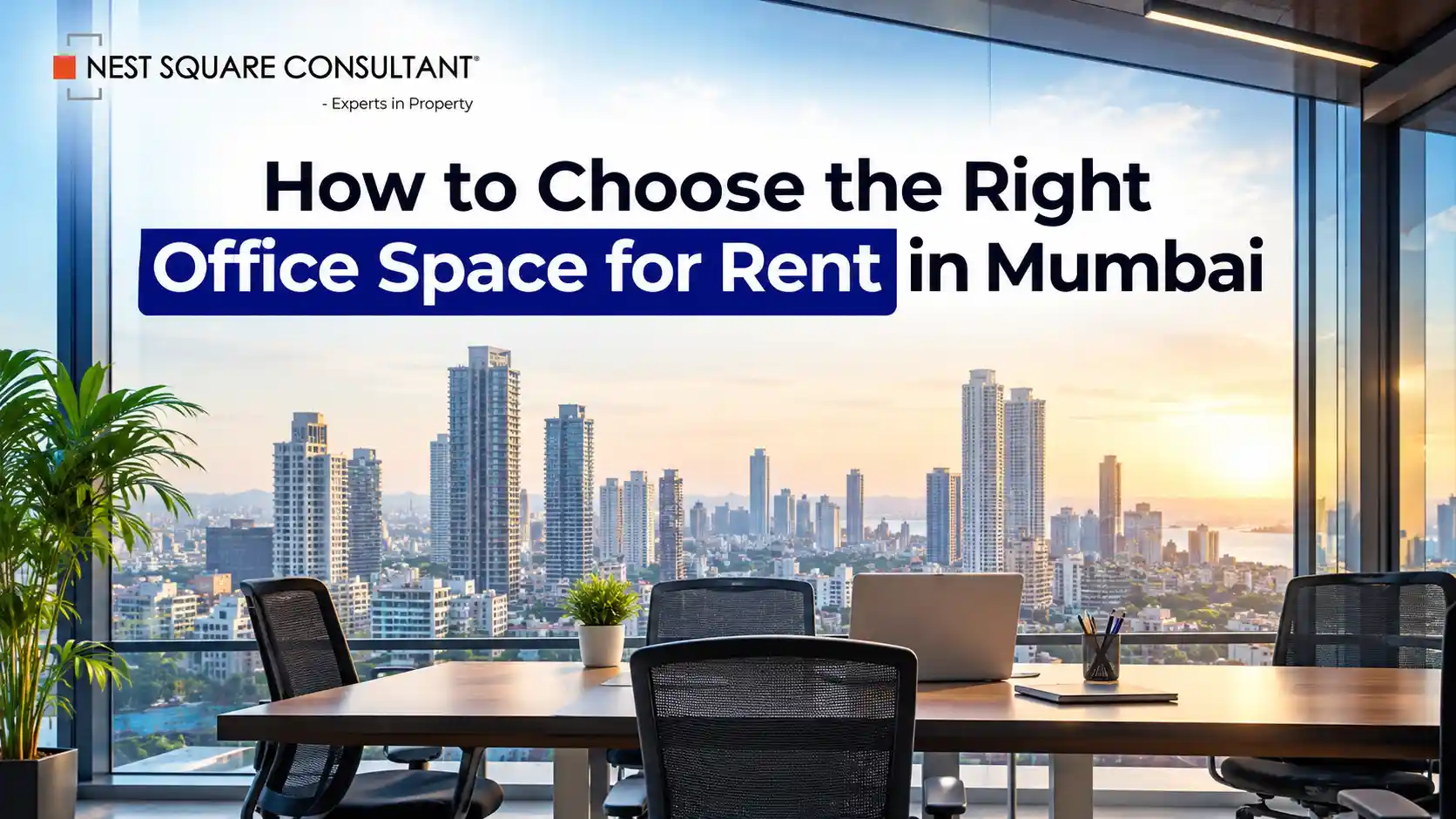
Finding the right office in Mumbai can feel a lot like finding the right home. The location has to work, the space has to feel right, and the cost has to make sense. With options ranging from compact workspaces in busy business hubs to premium Grade A corporate offices, choosing the right office space for rent in Mumbai can quickly become overwhelming.
The cheapest office isn’t always the best choice, and the most premium address isn’t always the right one either. Your office should make daily work easier, leave a positive impression on clients, keep your team comfortable, and give your business room to grow.
That’s where a little planning makes a big difference. At Nest Square Consultant, we help businesses navigate Mumbai’s commercial property market and shortlist office spaces based on practical needs: location, budget, connectivity, building quality and future growth. Whether you’re setting up a new business, expanding your team or relocating, knowing what to check before signing a lease can save you time, money and a lot of unnecessary hassle.
So before you fall for a workspace because of its interiors or an attractive rent, let’s look at the factors that really matter.
Quick Checklist: How to Choose an Office Space in Mumbai
- Define your space, layout and headcount needs.
- Shortlist locations based on employee commute and client access.
- Calculate the total occupancy cost, not just the rent.
- Compare carpet area, not super built-up area.
- Decide between furnished, bare shell or coworking space.
- Inspect the building’s infrastructure and legal approvals.
- Plan for 2–5 years of growth.
- Read the leave and license agreement carefully before signing.
Key Factors to Consider When Choosing an Office Space for Rent in Mumbai
1. Start by Understanding Your Business Requirements
Before you look at properties, define exactly what your business needs. Ask yourself:
- How many employees will use the office?
- Do you need private cabins or an open-plan layout?
- Will clients visit regularly?
- Do you need meeting or conference rooms?
- Will your team grow in the next two to five years?
- Do you need dedicated parking?
- Does your business benefit from a premium corporate address?
As a rough guide, businesses typically plan for 100–150 sq ft of carpet area per employee, including workstations and shared spaces. A small consulting firm may need a well-connected office with a professional reception, while a growing tech company may prioritise larger floor plates, meeting rooms and room to expand.
Creating an office space requirement checklist first stops you from being distracted by properties that look attractive but don’t suit your operations.
2. Choose the Location Carefully
Location is one of the biggest decisions when renting an office in Mumbai. Central addresses make access easier but cost more, while emerging business hubs often give you more space for the same budget. Here are some of the best commercial areas in Mumbai for offices:
Andheri
Andheri is one of Mumbai’s most practical office locations, thanks to its Western Railway station, metro lines, Western Express Highway access and proximity to the airport. Andheri East, including Chakala, Marol, MIDC and SEEPZ, is a well-established business district with a wide range of office options. If you’re exploring this area, see our office space for rent in Andheri East options.
BKC (Bandra Kurla Complex)
One of Mumbai’s most prestigious business districts. It suits companies that want a premium corporate address close to major financial institutions, though rents are significantly higher.
Lower Parel and Worli
Central locations with established commercial and lifestyle infrastructure, ideal for businesses that want a city-centre presence.
Powai, Goregaon and Malad
Suburban commercial hubs that offer a good balance between accessibility, modern office quality and more manageable rents.
The best location is the one that works for your employees and clients, not necessarily the most expensive one.
3. Set a Realistic Office Rental Budget
Rent is only one part of your office cost. Your total occupancy cost should include:
- Monthly rent
- Security deposit (often several months’ rent in Mumbai)
- Maintenance or CAM (Common Area Maintenance) charges
- GST on commercial rent, where the landlord is GST-registered
- Stamp duty and registration charges for the agreement
- Electricity and utilities
- Parking charges
- Interior and fit-out costs
- Internet, IT setup and moving expenses
Also remember that TDS on rent may apply to your business, depending on the rent amount. Office rents in Mumbai vary widely between micro-markets, based on building grade, connectivity and demand. Comparing only the advertised rent gives you an incomplete picture, so calculate your total monthly cost before shortlisting.
4. Understand Carpet Area vs Built-Up vs Super Built-Up Area
This is one of the most common and costly surprises for first-time office tenants in Mumbai.
- Carpet area is the actual usable space inside your office.
- Built-up area is the carpet area plus the thickness of the walls.
- Super built-up (chargeable) area is the built-up area plus your share of common areas such as lobbies, lifts and staircases.
Many commercial properties quote rent on the chargeable area, and the difference between chargeable and carpet area is called loading. It can be substantial. Two offices advertised at the same size and rent can offer very different usable space, so always ask for the carpet area and compare the effective rent per usable sq ft.
5. Decide Between Furnished, Bare Shell or Coworking Space
The type of office you choose affects both your upfront cost and your move-in time.
- Bare shell office: No ceiling, flooring or partitions. It offers maximum design freedom but needs a full fit-out.
- Warm shell office: Basic services such as ceilings, lighting and air conditioning are in place, and you add your own layout and furniture.
- Fully furnished office: Ready to move in with a lower setup cost, though rent is usually higher.
- Coworking or managed office: Flexible seats and short commitments, ideal for small or fast-growing teams.
If you choose a bare shell space, ask the landlord for a rent-free fit-out period, and plan your interiors early. Nest Square’s bare shell office fit-out team can help you estimate costs before you sign.
6. Consider Connectivity and Commute Time
An office that’s hard to reach becomes a daily problem, however good the property itself is. Check:
- Distance to local train and metro stations
- Access to major roads such as the Western Express Highway
- Bus routes and cab or auto availability
- Airport access, if your team travels often
- Parking and drop-off facilities
Think about where most of your employees live. An office that shortens the daily commute improves retention and makes hiring easier. For client-facing businesses, easy access also creates a better first impression.
7. Check the Building, Infrastructure and Legal Approvals
Don’t judge an office by its interiors alone. During a site visit, inspect:
- Elevators, power backup and air conditioning
- Fire safety systems and emergency exits
- Washrooms, common areas and reception
- Security and access control
- Internet service providers available in the building
- Overall maintenance standards
Also verify the paperwork. Confirm that the building has an Occupancy Certificate (OC), that the property is approved for commercial use, and that the building permits your type of business. A well-designed office in a poorly maintained or non-compliant building can become expensive and stressful over time.
8. Plan for Future Growth
A common mistake is choosing an office based only on your current headcount. Suppose you have 20 employees today but expect 35–40 within two years. Moving again soon means new deposits, new interiors, downtime and relocation costs.
You don’t need to rent far more space than you need right away. Instead, look for a building or location where expansion options are realistically available, or negotiate a right of first refusal on adjoining space.
9. Read the Lease Terms Before Signing
Most commercial rentals in Mumbai use a leave and license agreement, and in Maharashtra this agreement must be registered. Before signing, understand:
- The agreement duration and lock-in period
- The security deposit amount and refund conditions
- The rent escalation clause (how much rent rises, and how often)
- The notice period and renewal terms
- Who pays maintenance, repairs, GST and stamp duty
- Permitted business activities
- Subletting or assignment conditions
- Restoration requirements when you leave
If any clause is unclear, clarify it before signing. A slightly higher rent with flexible, transparent terms is often better value than a cheaper office with a long lock-in and restrictive conditions.
10. Work With an Experienced Commercial Property Consultant
Listings rarely tell the full story about actual availability, building condition, realistic rents or lease terms. Working with an experienced commercial property consultant in Andheri can save you weeks of searching.
At Nest Square Consultant, we start with your requirements, shortlist only relevant properties, arrange site visits, and support you through negotiation and documentation. Learn more about how our real estate consultants in Andheri work.
Common Mistakes to Avoid When Renting an Office in Mumbai
- Comparing rent without checking the carpet area and loading
- Ignoring CAM charges, GST and deposits in the budget
- Signing a long lock-in period without an exit clause
- Skipping the Occupancy Certificate and permitted-use checks
- Choosing a location that suits the owner but not the team
- Underestimating the time and cost of interiors
What Makes an Office Space the Right Choice?
The right office space for rent in Mumbai should actively support your business, not just provide four walls and desks. Before deciding, ask:
- Does the location work for my employees and clients?
- Can my business comfortably afford the total occupancy cost?
- Does the building offer the infrastructure and approvals we need?
- Can the space accommodate our growth?
- Are the lease terms fair and flexible for our business?
If the answer to all five is yes, you’re likely to have found an office that works for the long term.
Conclusion
Choosing an office space in Mumbai takes more than comparing rents. Location, connectivity, usable area, building quality, lease terms and future growth all deserve careful attention. Mumbai’s office market is active and competitive, which makes it even more important to know your requirements before you start viewing properties.
Whether you need a furnished office, a bare shell space, a coworking setup or another commercial property, Nest Square Consultant can help you find, evaluate and secure the right workspace, and even get it move-in ready with our office interior solutions.
Looking for an office in Andheri or anywhere in Mumbai? Talk to Nest Square Consultant and get a shortlist matched to your budget and requirements.
FAQs
1. Is Andheri a good location for an office in Mumbai?
Yes. Andheri is one of Mumbai’s most popular office locations because of its train, metro and highway connectivity, established business infrastructure and proximity to the airport. Andheri East, including Chakala, Marol and MIDC, offers a wide range of office options at various budgets.
2. How much office space is needed per employee?
Most businesses plan for around 100–150 sq ft of carpet area per person, including workstations and shared areas. The exact requirement depends on your layout, the number of cabins and meeting rooms, and your working style.
3. What is the difference between carpet area and super built-up area?
Carpet area is the usable space inside your office. Super built-up area adds walls and your share of common areas such as lobbies and lifts. Since rent is often charged on the super built-up area, always compare properties by carpet area to know what you’re really paying for.
4. What is a leave and license agreement for office space in Mumbai?
It is the most common rental agreement for commercial properties in Mumbai. It gives the tenant (licensee) the right to use the premises for a fixed period without transferring ownership rights. In Maharashtra, it must be registered, and stamp duty is payable on it.
5. What hidden costs should I consider when renting an office?
Beyond rent, budget for the security deposit, CAM charges, GST on rent, stamp duty and registration, utilities, parking, interiors, internet and moving costs. Calculating these upfront gives a realistic view of your total office cost.
6. What is a lock-in period in a commercial lease?
A lock-in period is the minimum time during which neither party can end the agreement without penalty. For offices, it commonly ranges from one to three years, so negotiate it carefully based on how certain your business plans are.
7. Should I choose a furnished office or a bare shell office?
A furnished office lets you move in quickly with lower upfront costs, which suits smaller or growing teams. A bare shell office costs more to set up but lets you design the space around your brand and workflow, which suits established businesses planning a longer stay.
8. Where can I find office space for rent in Mumbai?
Office spaces are available across Andheri, BKC, Lower Parel, Worli, Powai, Goregaon and Malad. Nest Square Consultant helps businesses shortlist suitable offices based on location, budget and requirements, with a special focus on Andheri and the western suburbs.