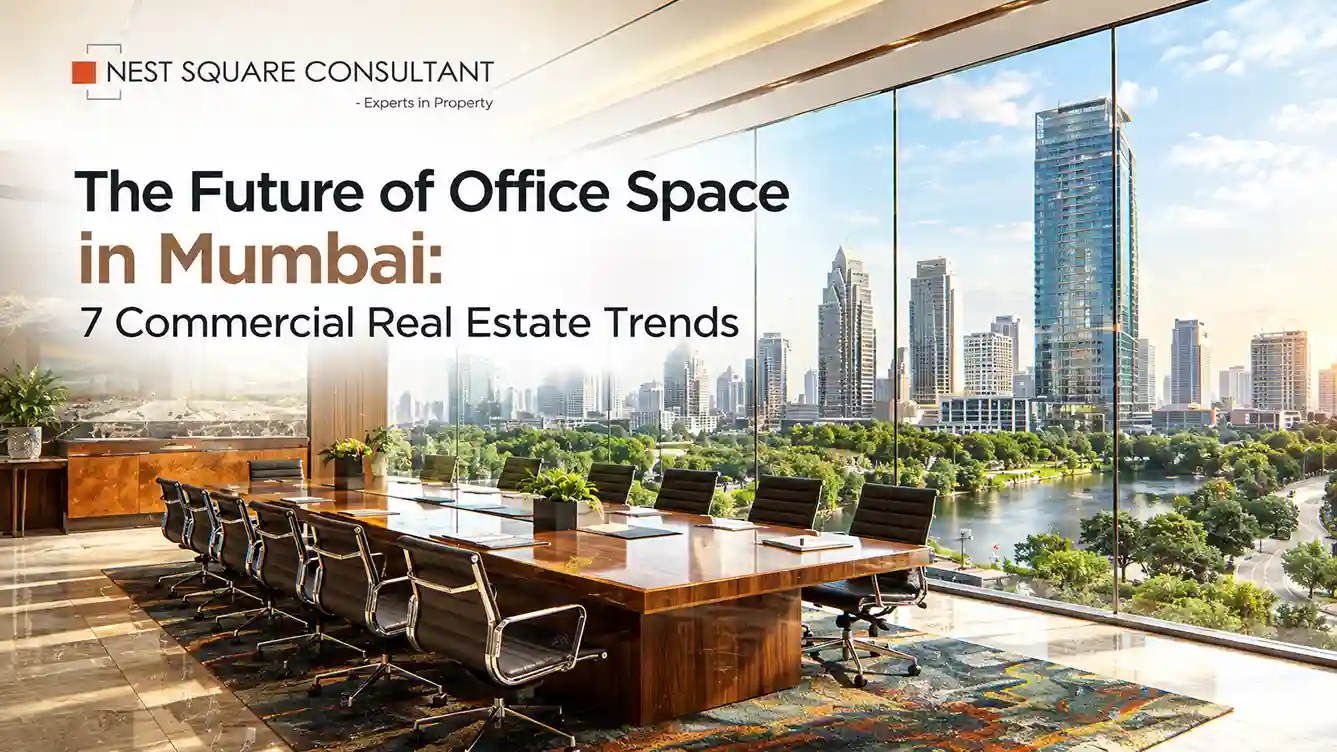
Mumbai’s office spaces are changing, and not just because businesses are changing the way they work. The days when an office was simply desks, cabins and a reception area are fading. Today, businesses want spaces that are well-connected, flexible, comfortable and built around how their teams actually work.
The numbers show the market is active. Mumbai recorded 4.1 million sq ft of office leasing in Q2 2026, driven by demand from BFSI, IT-BPM, and engineering and manufacturing occupiers. Vacancy continued to fall and office rents kept rising across suburban and peripheral corridors. For businesses searching for office space, that means more competition for good properties and less room for poor decisions.
At Nest Square Consultant, we work with businesses across Andheri and Mumbai every day. That gives us a close view of how requirements are shifting. In this guide, we break down the seven office space trends shaping Mumbai’s commercial real estate market and what each one means for your next move.
Key Takeaways
- Flexible and managed offices now make up a significant share of office demand in India.
- Connectivity and commute times matter more than a prestige address.
- Businesses are moving to better-quality Grade A buildings, even at a higher rent.
- Global Capability Centres (GCCs) are increasing competition for quality office space.
- Hybrid work is changing office design from rows of desks to people-focused layouts.
- Green, energy-efficient buildings are becoming the norm for new leases.
- More businesses want one partner for property search, leasing and interiors.
1. Flexible Office Spaces Will Become Mainstream
The traditional long-term lease is no longer the only option. Companies want to scale their workspace up or down as their teams and plans change. This is driving demand for coworking spaces, managed offices and serviced offices across Mumbai.
The data supports this shift. Colliers expects flex space operators to lease 15–18 million sq ft in 2026, accounting for 20–25% of overall office leasing in India. In Q2 2026, flex spaces made up more than a quarter of total office demand.
Flexible workspaces are especially useful for startups, project teams, growing companies and businesses entering Mumbai for the first time. Instead of committing to a large conventional office on day one, companies can start with what they need and expand later.
What this means for your business
The choice is no longer strictly coworking versus a traditional office. Many businesses now use a hybrid approach: a dedicated office for core teams, plus flexible or managed office space when they need extra capacity. If you’re weighing both options, Nest Square Consultant can help you compare coworking and managed office spaces in Andheri against conventional leases, based on total cost rather than just monthly rent.
2. Location Will Be About Connectivity, Not Just Prestige
A premium address can help a business’s image, but location decisions are becoming more practical. Employees want shorter commutes. Clients want easy access. Businesses want to be close to metro lines, residential areas, restaurants and other commercial hubs.
That’s why well-connected business districts and emerging office corridors are both attracting attention. Cushman & Wakefield reported Thane-Belapur Road as Mumbai’s most active office corridor in Q2 2026, followed by Lower Parel. Established hubs like BKC, Powai and Andheri continue to serve different business needs.
Why Andheri stands out
Andheri has the airport, the Western Express Highway, suburban rail, and metro connectivity on both sides. Andheri East hubs such as Chakala, Marol, MIDC and SEEPZ serve corporate, IT and GCC occupiers. Andheri West, around Link Road, Lokhandwala and Veera Desai Road, is a strong base for media, creative and retail businesses. Industry commentary notes that Andheri is drawing occupiers looking for Grade A infrastructure at a more efficient cost, helped by its established commercial base and airport, road and metro access.
When you evaluate office space for rent in Andheri, look beyond the rent. Consider the commute for your team, nearby infrastructure, parking, and how well the location will support your business in three to five years.
3. The Flight to Quality: Grade A Offices Will Win
Businesses are becoming more selective about the buildings they occupy. Grade A office space, with modern infrastructure, efficient floor plates, reliable power backup, professional building management and good amenities, often delivers more value than an older building with a lower headline rent.
This “flight to quality” is happening across India’s office markets. Companies want workplaces that support productivity, attract talent and reflect their brand.
Why quality matters
The right office shapes how employees experience their workday and how clients see your business. A cheaper building with frequent power cuts, poor lifts or high maintenance charges can cost more in the long run. If you’re planning a long-term move, compare the total cost of occupancy, not just rent per sq ft.
For property owners, this trend matters too. Simply having vacant office space is no longer enough. Well-maintained, thoughtfully planned buildings will keep attracting tenants.
4. GCCs Will Keep Shaping Mumbai’s Office Market
Global Capability Centres (GCCs) have become one of the biggest drivers of office demand in India. These centres house technology, finance, analytics, research and engineering teams for global companies. Colliers projects GCC leasing of 30–35 million sq ft in 2026, around 40–50% of total Grade A absorption in India.
Mumbai is well positioned for GCC growth because of its financial ecosystem, established corporate base and skilled workforce. GCCs aren’t the only source of demand. Domestic companies, professional services firms, BFSI companies and technology businesses remain important occupiers.
What this means for your business
GCCs typically take large, high-quality spaces, which tightens the supply of good Grade A office space in Mumbai. For smaller and mid-sized businesses, this means starting the office search early and moving quickly once you find the right property.
5. Offices Will Be Designed Around People, Not Just Desks
The future office is not a room full of identical workstations. With hybrid work now common, businesses are rethinking how people use the office when they do come in.
A modern office layout may include:
- Collaborative meeting and project areas
- Quiet rooms and focus pods
- Informal seating and breakout zones
- Video-conferencing-ready meeting rooms
- Comfortable pantries and common areas
- Modular layouts that can be reconfigured as the team changes
The goal is simple: when employees come in, the office should give them a reason to be there.
This is why office design now matters as much as location and carpet area. If you’re considering a fully furnished office for rent in Andheri, check whether the existing layout suits hybrid work. If you’re moving into a bare-shell space, a well-planned fit-out makes a big difference. Nest Square’s turnkey office interiors in Mumbai cover space planning, design and execution so your office works for your team from day one.
6. Sustainability and Energy Efficiency Will Drive Property Decisions
Sustainability is moving from a “nice to have” to a core requirement in commercial real estate. Businesses are paying closer attention to energy use, natural light, efficient air conditioning, water management and green building certifications. Colliers expects green-certified and tech-integrated buildings to account for nearly 80% of office leasing in 2026.
There’s a practical side to this too. Energy-efficient buildings can lower electricity and maintenance costs over time, while creating a healthier, more comfortable workplace.
What to look for
When comparing office spaces, ask about more than rent. Check the building’s green certification (such as IGBC or LEED), power backup, HVAC efficiency, maintenance charges and long-term running costs.
7. Businesses Will Want End-to-End Commercial Real Estate Support
Finding the property is only one part of setting up an office. Businesses also need help with rent negotiations, lease terms, documentation, due diligence, interiors, furniture and handover. Managing all of this independently takes time, especially for companies new to Mumbai’s commercial property market.
This is where an experienced commercial property consultant in Andheri adds real value.
At Nest Square Consultant, we start by understanding your business before recommending any property. We look at your team size, budget, preferred locations, timeline and growth plans. Our commercial real estate services in Mumbai cover property search, site visits, negotiation, documentation and handover. Because we also offer office interior solutions, we can help you find the right space and make it move-in ready with one team.
This end-to-end approach keeps your search focused. You compare properties based on what your business actually needs, rather than taking the first available option.
What These Trends Mean If You’re Looking for Office Space in Andheri
If you’re planning a move in 2026, here’s a quick checklist before you sign:
- Carpet area vs built-up area. Confirm the actual usable carpet area, not just the chargeable area.
- Lock-in period and rent escalation. Understand how long you’re committed and how much rent will rise each year.
- Security deposit. Deposits in Mumbai can be several months’ rent, so negotiate where possible.
- Rent-free fit-out period. For bare-shell offices, ask the landlord for time to complete interiors before rent starts.
- Building quality. Check power backup, lifts, parking, fire safety and maintenance charges.
- Commute and connectivity. Test the route at peak hours from where your team lives.
- Room to grow. Check whether the building has space for expansion.
A trusted real estate consultant in Andheri can help you check these points and negotiate better terms.
The Future of Office Space in Mumbai: The Bigger Picture
Mumbai’s office market won’t be defined by one type of property. It will be shaped by flexibility, connectivity, building quality, employee experience and sustainability.
Some companies will stay with traditional offices. Others will choose coworking or managed workspaces. Many growing businesses will move between formats as their teams expand. The common thread is the need for a workspace that makes business sense today and supports growth tomorrow.
For anyone searching for commercial property in Mumbai, the smartest approach is to look beyond the monthly rent. Consider location, accessibility, building quality, employee needs, future expansion and the total cost of running the space.
Conclusion
Mumbai’s commercial real estate market is changing with the way businesses work. Flexible offices, well-connected locations, Grade A buildings, people-first design and sustainable workplaces are all becoming standard expectations. The right office should fit today’s requirements and leave room for tomorrow’s plans.
If you’re looking for office space for rent in Andheri, a commercial property in Mumbai, or help designing your new workspace, Nest Square Consultant can guide you from the first shortlist to the final handover.
Frequently Asked Questions
1. What are the major commercial real estate trends in Mumbai in 2026?
The key trends are the growth of flexible and managed offices, a focus on well-connected locations, rising demand for Grade A buildings, GCC expansion, people-focused office design for hybrid work, green and energy-efficient buildings, and demand for end-to-end commercial real estate support.
2. Is flexible office space becoming popular in Mumbai?
Yes. Coworking spaces, managed offices and serviced offices are growing quickly because they let businesses scale their workspace up or down without long-term commitments. Many companies now combine a conventional office with flexible space.
3. Coworking vs traditional office: which is better for a growing business?
Coworking suits startups and small teams that need flexibility, quick move-in and low upfront costs. A traditional leased office suits established teams that want more control, privacy and brand identity. Nest Square Consultant can help you compare both based on your team size, budget and growth plans.
4. Should businesses rent or buy commercial property in Mumbai?
There’s no single answer. Renting offers flexibility and lower upfront costs, while buying suits businesses with stable long-term plans and available capital. The right choice depends on your budget, expansion plans and business goals.
5. Is Andheri a good location for office space in Mumbai?
Yes. Andheri is one of Mumbai’s most popular commercial locations thanks to its airport access, metro and rail connectivity, and established business hubs such as Chakala, Marol and MIDC. It offers options ranging from coworking spaces and furnished offices to Grade A corporate buildings.
6. What is a managed office space?
A managed office is a private, dedicated office set up and run by an operator. The operator handles interiors, furniture, IT, housekeeping and maintenance. You get your own branded space without the hassle of fit-out and daily management.
7. What should I check before leasing office space in Mumbai?
Check the carpet area, lock-in period, rent escalation, security deposit, maintenance charges, rent-free fit-out period, building approvals and connectivity. Working with a commercial property consultant like Nest Square can help you avoid costly mistakes in the lease terms.