For years, office design focused mainly on fitting people into a space efficiently. Today, businesses are looking beyond desks and meeting rooms to create workplaces that support comfort, collaboration, flexibility and employee wellbeing.
This shift has led to the rise of experience-led office spaces. At Nest Square Consultant, we believe a well-designed commercial space should not only look professional but also support how people work and reflect the business’s identity.
As workplace expectations continue to evolve in India, experience-led interior planning is becoming an important part of creating modern, functional and engaging offices.
What Is an Experience-Led Office Space?
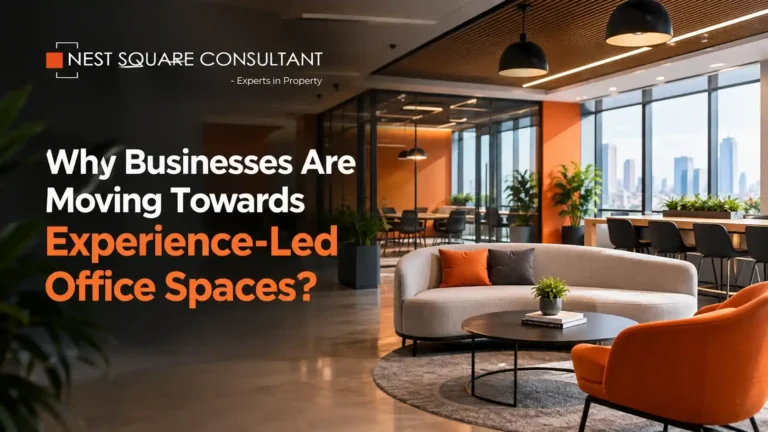
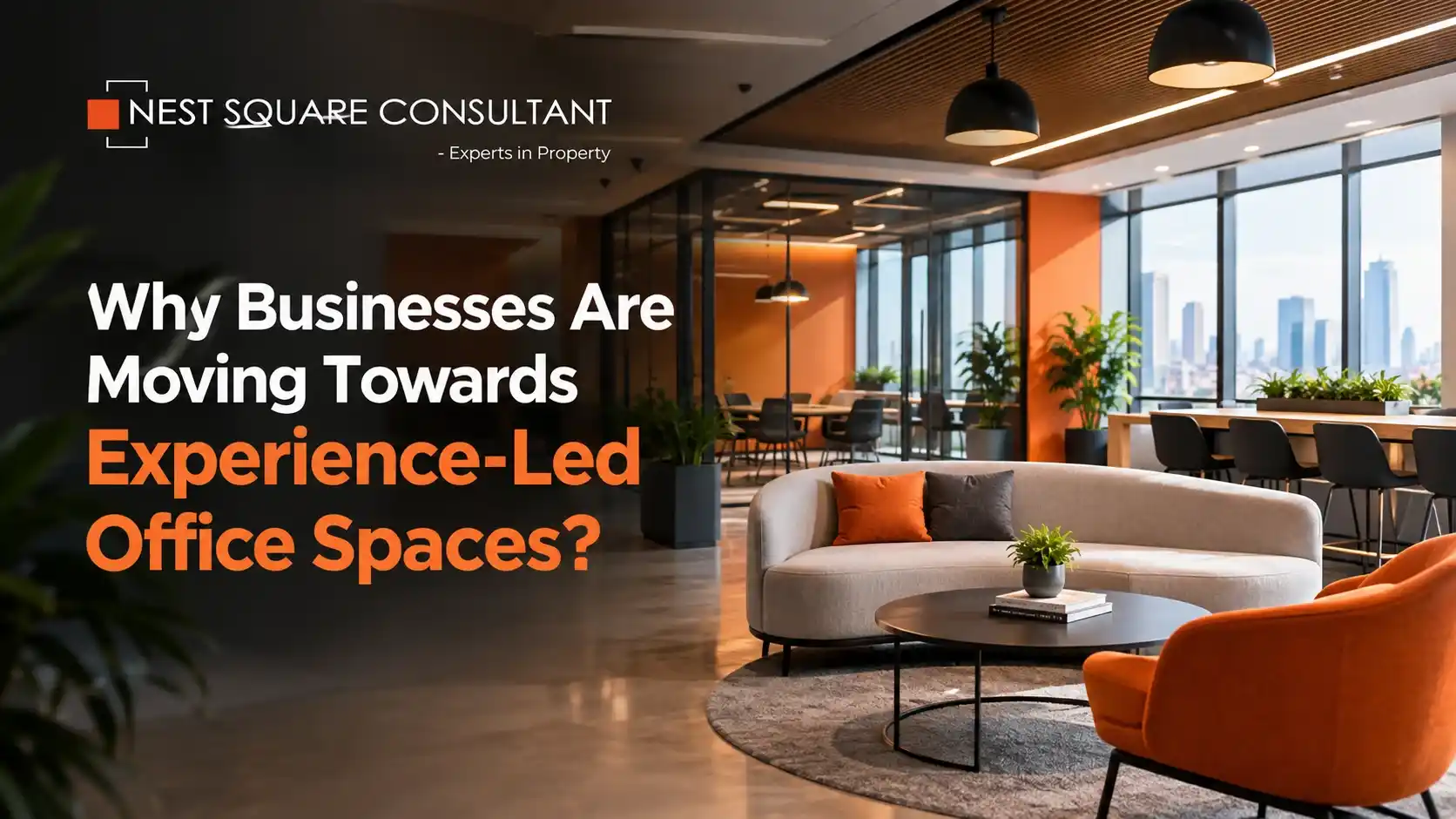
An experience-led office is designed around how people use and experience the workplace, rather than simply how many desks can fit inside it.
It may include different areas for focused work, team discussions, informal meetings, relaxation and social interaction. Instead of giving every activity the same type of space, the office provides employees with choices based on what they need to do.
For example, a modern office may include:
- Quiet areas for concentrated work
- Meeting rooms for private discussions
- Collaborative spaces for team projects
- Comfortable breakout areas
- Informal seating for quick conversations
- Pantry and social areas
- Flexible workstations
- Spaces that reflect the company’s brand and culture
Research into activity-based offices suggests that thoughtfully designed environments can encourage movement and coworker interaction, although these layouts are not a universal solution and need to be planned according to the organisation’s requirements.
Why Are Businesses Moving Towards Experience-Led Offices?
1. Employee Expectations Are Changing
Employees increasingly expect their workplace to support different ways of working.
Someone may need complete concentration in the morning, attend a team meeting later and work with colleagues on a project in the afternoon. A single desk-based environment may not be suitable for all these activities.
Experience-led offices respond by providing different settings for different needs. Instead of forcing every task into the same type of workspace, the office gives employees greater choice.
2. Offices Need to Give People a Reason to Come In
Hybrid working has changed the role of the physical office.
When employees can work from home for part of the week, the office needs to offer something that cannot be easily replicated at home. Collaboration, team interaction, social connection and access to purpose-built spaces can become important reasons for employees to spend time in the workplace.
This is one reason experience-led design is gaining attention. A thoughtfully designed office can become a place where employees come together, exchange ideas and build stronger working relationships.
3. Better Collaboration Requires Better Spaces
Collaboration does not always happen effectively around a standard conference table.
Teams may need whiteboards, flexible seating, informal discussion areas or smaller rooms for focused conversations. An experience-led office can create dedicated spaces for these different types of interaction.
The goal is not to make every area open and collaborative. It is to provide the right environment for the right activity.
Key Features of an Experience-Led Office
1. Flexible Work Zones
Modern offices increasingly use zones rather than treating the entire workplace as one uniform area.
A combination of individual workstations, meeting rooms, collaboration areas and informal spaces allows employees to move between environments according to their tasks.
2. Comfortable and Functional Furniture
Furniture has a direct effect on how people use an office.
Ergonomic chairs, suitable desks, comfortable lounge seating and flexible furniture can make the workplace more practical while also contributing to its overall appearance.
3. Natural Light and Greenery
Lighting, greenery and the general indoor environment can influence how people experience a workplace.
Even simple additions such as indoor plants, better use of daylight and thoughtful lighting can make a space feel more welcoming.
4. Spaces for Privacy
One common mistake is assuming that a modern office must be completely open.
Employees also need places where they can concentrate, make private calls or have confidential conversations. A balanced office therefore combines open collaboration areas with quieter spaces.
Experience-Led Design Is More Than Aesthetic Appeal
A visually attractive office may create a good first impression, but experience-led design goes further.
The layout should support the actual working style of the business. A creative agency, financial company, healthcare organisation and technology business may have completely different workplace requirements.
This is why businesses should consider factors such as:
- Number of employees
- Nature of daily work
- Hybrid working patterns
- Team structures
- Client visits
- Privacy requirements
- Storage needs
- Meeting frequency
- Future expansion
- Company culture
Good office design connects these practical requirements with the look and feel of the workplace.
How Office Design Can Strengthen Brand Identity
An office is often one of the first physical touchpoints between a business and its employees, clients and visitors. Colours, materials, furniture, lighting, reception design and meeting areas can communicate aspects of a company’s identity without using excessive branding.
For example, a professional services firm may prefer a sophisticated and understated environment, while a creative business may choose a more flexible and expressive design. This makes office interiors part of the broader business experience rather than simply a construction or furnishing exercise.
Businesses looking for Office Interior Designers in Andheri can benefit from working with professionals who understand both design and the practical requirements of commercial workplaces.
The Role of Commercial Interior Designers
Commercial interior design requires a different approach from designing a residential space. A commercial workplace has to balance aesthetics with employee movement, functionality, safety, client interaction and long-term usability.
Professional Commercial Interior Designers in Mumbai can help businesses plan the workplace around these requirements instead of selecting individual design elements without considering the complete space.
At Nest Square Consultant, commercial interior planning focuses on creating spaces that balance functionality, visual appeal and the specific requirements of the business. From workplace planning to interior execution, the objective is to create a commercial environment that works for everyday operations.
What Businesses Should Consider Before Redesigning an Office
Before starting an office renovation or fit-out, businesses should answer a few practical questions:
- Understand How the Office Is Used: Observe how employees currently work. Which spaces are constantly occupied? Which areas are underused? Where do meetings happen? Are employees struggling to find quiet areas?
- Plan for Future Growth: An office should not only work for today’s team size. If the business expects to grow, the design should allow reasonable flexibility.
- Balance Open and Private Areas: Avoid designing an office entirely around open seating. A useful workplace usually needs a combination of collaborative and private environments.
- Prioritise Function Before Decoration: A beautiful office that creates noise, congestion or poor workflow will not provide a good experience. Functionality should guide the design.
- Work With the Right Professionals: An experienced commercial interior design team can bring together space planning, aesthetics and practical workplace requirements.
The Future of Office Design Is Becoming More Experience-Focused
The office is no longer simply a place where employees sit and complete their daily tasks.
As hybrid work, flexible spaces and changing employee expectations continue to influence businesses, workplaces are increasingly being designed around purpose, experience and flexibility.
For businesses, this does not mean creating the most expensive or fashionable office. It means creating a workplace that makes sense for the people who use it.
An effective experience-led office should make work easier, support collaboration when needed, provide privacy when required and represent the business professionally.
That is where thoughtful commercial interior planning can make a meaningful difference.
Nest Square Consultant helps businesses explore practical commercial interior solutions based on their workplace requirements, business needs and long-term objectives.
Conclusion
Experience-led office spaces represent a broader change in how businesses think about their workplaces. Instead of asking only how many people can fit into an office, companies are increasingly considering how effectively the space supports the people using it.
For businesses planning a new workplace or upgrading an existing one, the right design can bring together functionality, comfort, collaboration and brand identity.
Nest Square Consultant can help businesses create commercial interiors that are planned around how their teams work and how their customers experience the space.
FAQs
1. What is an experience-led office space?
An experience-led office space is designed around employee comfort, wellbeing, and productivity. It includes collaboration areas, quiet zones, wellness corners, and smart technology, giving people a genuine reason to choose working from the office.
2. Why are companies shifting to experience-led offices?
Companies are shifting because hybrid work has changed employee expectations. A well-designed office attracts talent, improves collaboration, supports wellbeing, and gives teams a strong reason to commute instead of working from home.
3. How does office design affect employee productivity?
Good office design reduces distractions, supports different work styles, and improves comfort through better lighting, air quality, and ergonomics. When employees feel comfortable and supported, they stay focused, engaged, and productive for longer.
4. What features should a modern office include?
A modern office should include collaboration hubs, quiet focus pods, a social pantry, wellness spaces, ergonomic furniture, hybrid-ready meeting rooms, reliable high-speed internet, good natural light, and healthy indoor air quality.
5. Can small offices in Mumbai be experience-led?
Yes. With smart space planning and multi-use zones, even compact offices can feel open and functional. Experienced commercial interior designers in Mumbai can maximise every square foot without compromising comfort or style.